

"Practically perfect in every way"
Measurement, from Mary Poppins to Lewis Carroll

One of the whimsical moments in the film Mary Poppins is when the no-nonsense nanny pulls out a measuring tape from her bottomless bag and measures the children “…to see how you two measure up…”:
Micael’s ‘measure’ shows him to be “Extremely stubborn and suspicious,” and Jane is found to be “Rather inclined to giggle, doesn’t put things away.”

Well…
A retrospective, judgmental, skeptical adult of ~six decades later might raise an eyebrow (or two) when considering the way we measure others, be them children, our peers, colleagues, or reportees…
Measure up…?
The dictionary defines “
measure up”as
“to have necessary or fitting qualifications…often used with to….”What is Mary Poppins measuring the children—and herself (↓)—up to?
As it seems from the readings (and well supported by the movie story), the children are measured up to contemporary adult criteria, specifically expressed by their father, Mr. Banks1, in terms of purposefulness2, discipline3, and practicality4.Objectively and non-judgmentally—these were, indeed, the criteria for raising “good” children at the time. But…
Michael does not, obviously, measure up right by the aforementioned contemporaneous opinions: He is “extremely stubborn and suspicious.”
However, these measures are not as negative as they might appear:
Michael appears to be persistent and purposeful5.
His suspiciousness is also in place, mainly in a world of strict [and sometimes—exploiting] adults; he appears to be a curious kid, who doubts what he sees or hears, and is very aware of his conditions and situation6.Jane is measured by values similar to those her mother appears to fight against: She is giggly and doesn’t appear to focus on her tidying duties, and—unlike Michael, who is considered by his character—is judged by her behavior.
Today, we may have related to Jane as lively, cheerful, and playful, and Michael as curious and resolute; both would seem like normal, happy kids…!
How would you measure [other] people?
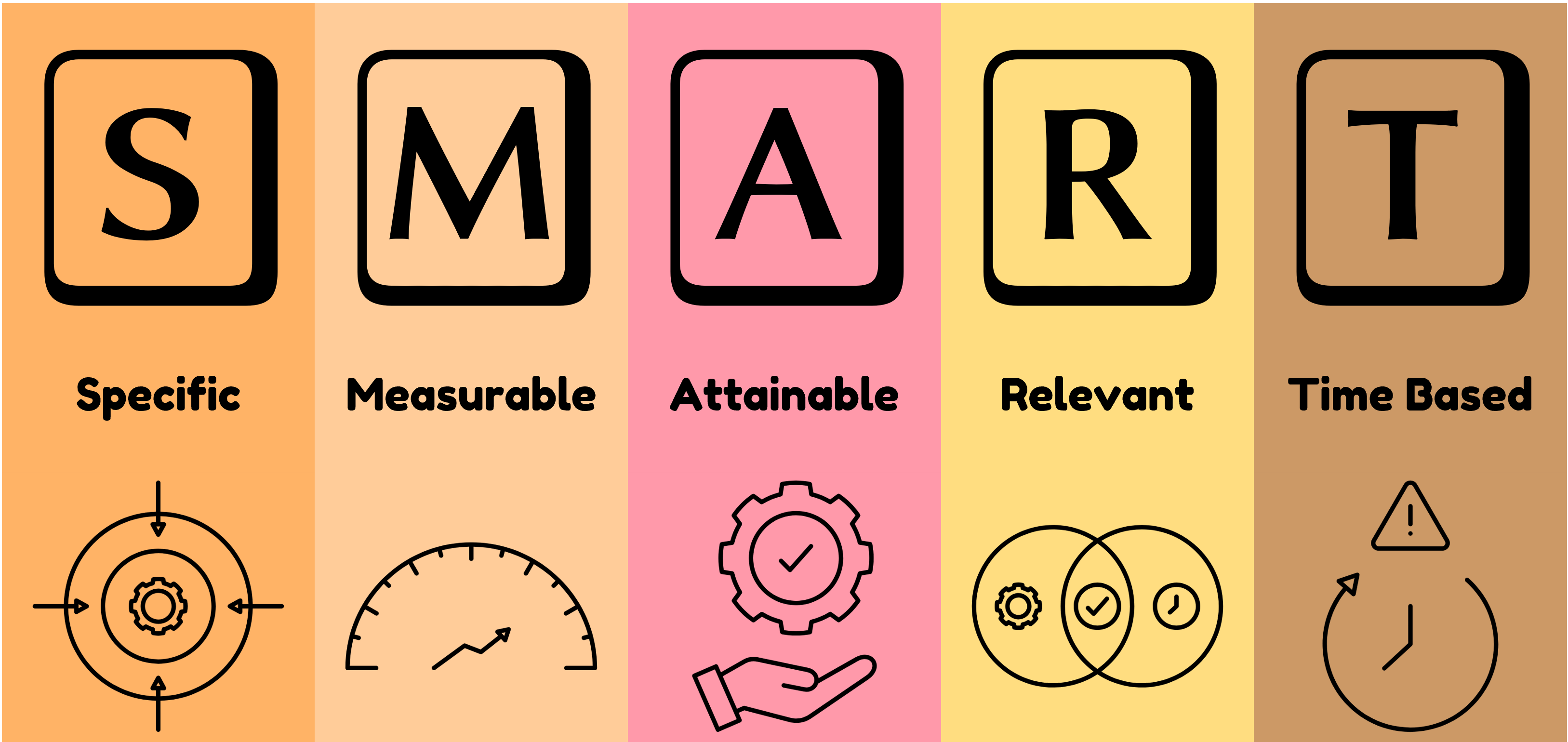
Usually, it is recommended to use SMART goals7:
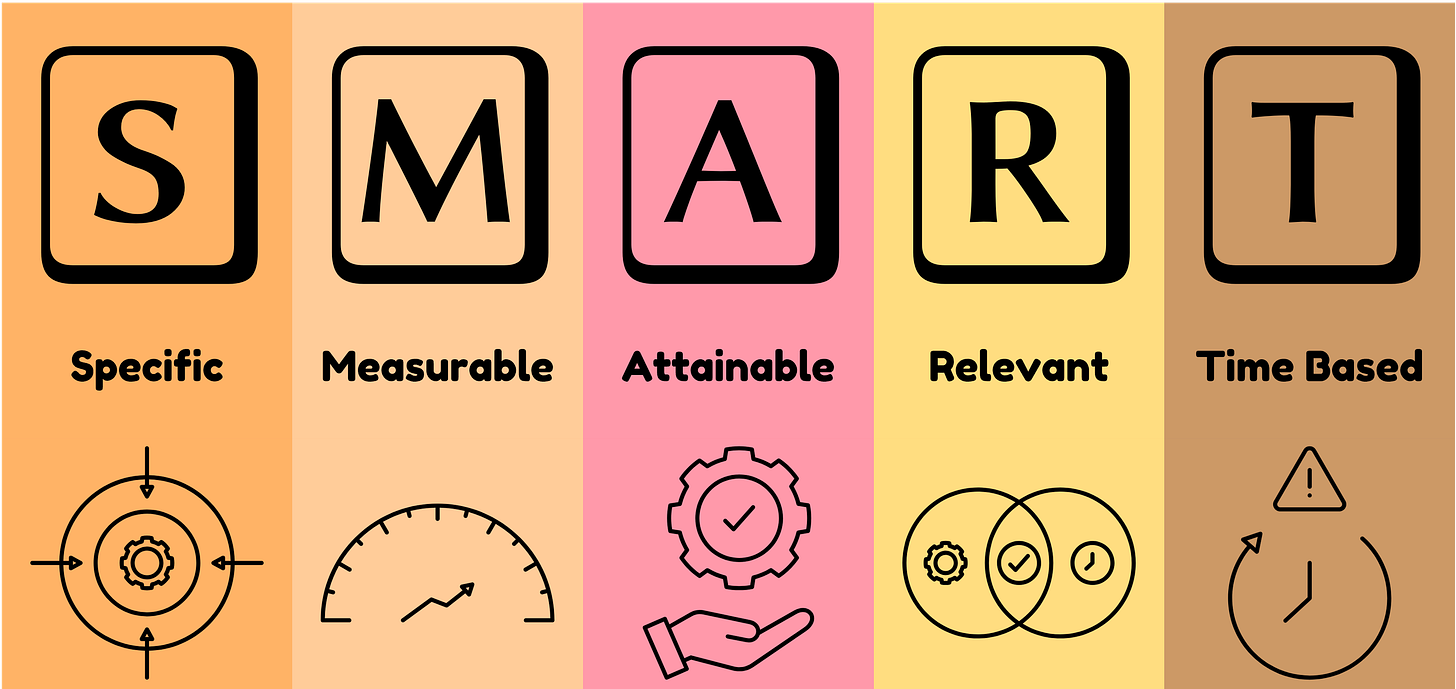
For example: When setting goals to your employees, you may wish to keep them—
Specific and targeted, not [too] general and vague.
It should be clear what we’re after specifically, not in general terms.Measurable in an understood way: Not by ‘gut feelings’8 or ‘assessments,’ but by actual accomplishments.
Attainable and tangible: Goals set up too high, too far, or without reachability might [should?] be dropped9.
Relevant to the person, the situation, time and place, context, justifyingly related to the person’s direction and related to his motivational factors.
Time-based and limited to a manageable time frame: Not too short (to allow nothing to be done), not too long (to lose any possible context, impact, or sense).
Are Mary Poppins's measures SMART?
Are yours?
How would you measure yourself?
Challenged by Michael—“How about you?” —
the nanny measures herself to show
“As I expected: Practically perfect in every way!”
Whereas this high self-regard may be somewhat acceptable with Mary Poppins, most other humans should recall that “Pride goeth before destruction, and an haughty spirit before a fall.10”The general advice11 would be to follow the thought of Robert Southey:
”It is not for man to rest in absolute contentment.
He is born to hopes and aspirations as the sparks fly upward,
unless he has brutified his nature
and quenched the spirit of immortality which is his portion.”Much has been written and said about vanity, so the best summary to this section may be “Wisdom Begins in Wonder12”; look at small children—and you may understand.

How would you measure your project or operation?
If people fall for self-admiration or overconfidence, why would their operations be different?
In fact—when facing criticism, inspection, others’ opinions, pressure, and stress—it would be quite natural to blow one’s horn, embellish or fancify data, facts, or information.A project, a process, or a system can never be—or be assumed to be—”perfect”; as long as the [living] organization exists—it changes, transforms, and evolves, and with it—its surrounding conditions, interactions, requirements, and necessities. Hence—its goals, objectives, measures, and measurements.

Where to start?
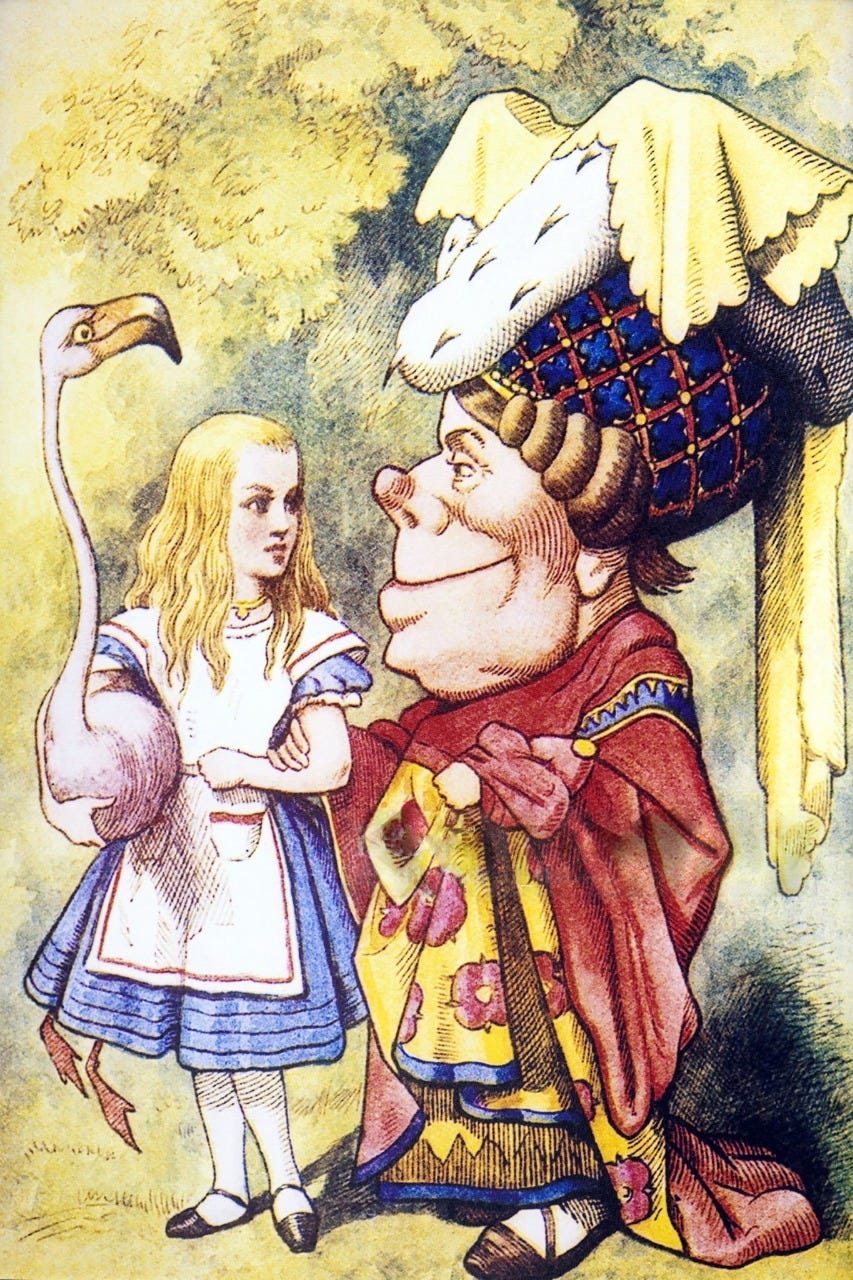
Take Lewis Carroll’s advice:
“Never imagine yourself not to be otherwise
than what it might appear to others
that what you were or might have been
was not otherwise than what you had been
would have appeared to them
to be otherwise..”
[Some] related posts:
“To measure is to know.”
“If you cannot measure it, you cannot improve it.”Citius ‐≻‑⋟–≫—⋙―⟫
Agile team’s velocity may suggest how quickly it is moving... but—where...‽A Pseudo-Zen Story
“...the truth...always rises above falsehood as oil above water...”
A short lesson from “Don Quixote”
A Pseudo-Zen Pondering
“...I wonder what Latitude or Longitude I’ve got to?...”
(Alice had no idea what Latitude was, or Longitude either, but thought they were nice grand words to say)
We fault our time when the fault is in us...
And what fault does our time has besides us...‽
Neil Gaiman on cautionary questions
And he lighted his lamp again
“…I am partially responsible for allowing the children to spend their days on worthless frivolity to the exclusion of all else!
But it is high time they learned the seriousness of life!”
“A British bank is run with precision;
A British home requires nothing less!
Tradition, discipline and rules
Must be the tools:
Without them, disorder, chaos, moral disintegration…
In short, you have a ghastly mess.”
“The children must be molded, shaped, and taught
That life’s a looming battle to be faced and fought
[…]
If they must go on outings
These outings ought to be
Fraught with purpose, yes, and practicality…”
In fact—his “stubbornness” [with his Tuppence] turns out to be well-justified and extremely fruitful, as discovered in Mary Poppins Returns…
Alas, the ‘sequel’ portrays him otherwise…
Sometimes, one would wonder if it’s not ‘gut fillings’…but I digress…
A mathematician, a physicist, and an engineer are presented with the challenge of reaching a woman across a room. They can only move half the remaining distance with each step.
The mathematician observes that the terms imply an infinite series, hence—they will never reach the woman, only asymptotically close to her, so he leaves the place.
The physicist agrees that they’ll reach the woman at infinity, so sits down to work out underlying process principles.
The engineer begins walking immediately 🤓: He understands that, theoretically he will not reach the exact point in a finite number of steps; he will nonetheless get “close enough for all practical purposes”…
As self-improvement and similar topics are quite out of the scope of this blog, I don’t elaborate (unless asked).
Attributed to Socrates.