

60 Floors
A Pseudo-Zen Story

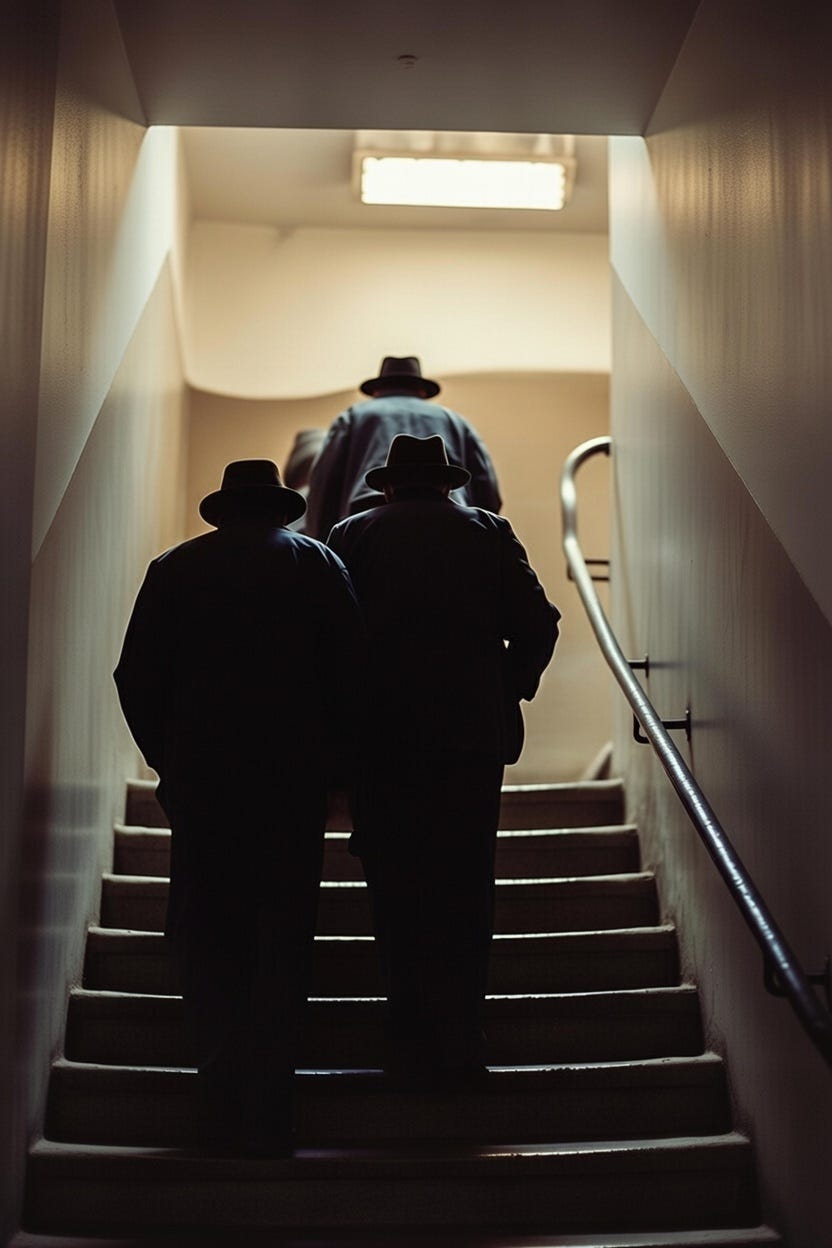
These three friends arrived at the big city.
They looked for a place of residence close to their workplace,
but couldn’t find an affordable and suitable one.
As a last resort, they had rented a small, cozy flat on the 60th floor of a large apartment building. A positive aspect was the lift, which took them up quickly (with almost no stops!) at the end of their hard-working day.
One day they arrived, tired and eager to lie down and rest.
They approached the lift to discover, to their horror, a note tacked to the door:
”The lift is out of service due to a technical fault.”
They were speechless.
Climbing the stairs up 60 floors after such a hard day at work…
But they pulled themselves together and decided to assume the task in good spirit:
On the first twenty floors, one will tell jokes and funny tales to divert their attention from the physical effort.
On the next twenty floors, another will sing to them to pass the time pleasantly.
Lastly, on the last twenty floors, the third will deliver sad news and sorrowful occasions to forget the difficulty against grief and misery.
And—there they were going.
On the first twenty floors they were laughing so much—they didn’t even notice the difficulty of the climb.
On the next twenty floors, the good singer entertained them, helping them pass the time enjoyably.
On the last twenty floors, they were moaning heartily from the sad stories they heard, which brought tears to their eyes.
As they arrived at the last stair landing, the third friend—the teller of sad stories—stopped and said, ”Friends, behold! I have one more tale, which is much sadder than everything you’ve heard thus far!”
“What can it be?” the friends asked with bated breath.
“I forgot the door key downstairs…”
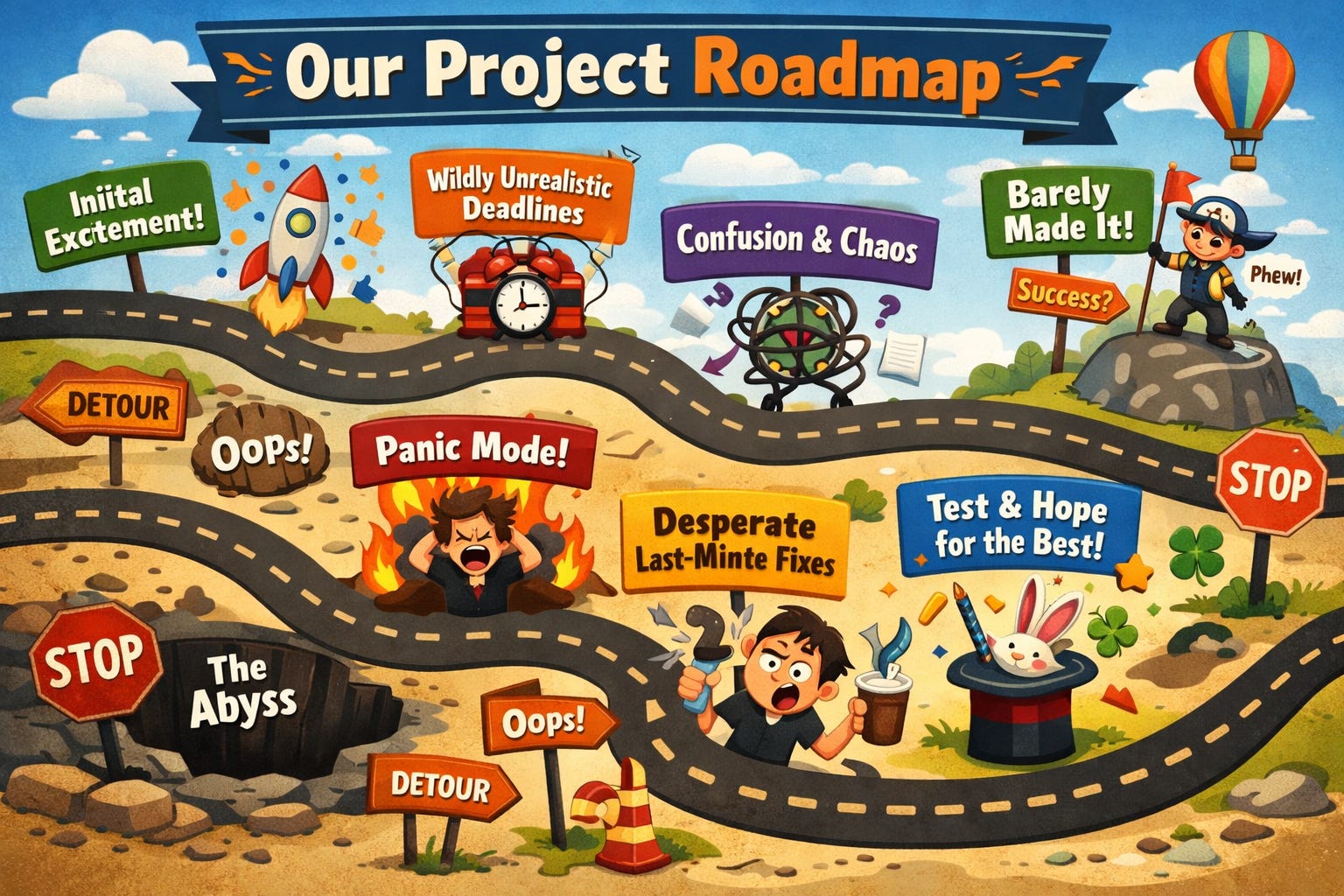
Projects seem, sometimes, like that: Starting in a good spirit and rejoicing, then chanting to pass the time (?), and eventually sharing somber and gloomy tales of worse ones yet, just to arrive at last straight to find out the project missed its most important feature… 1
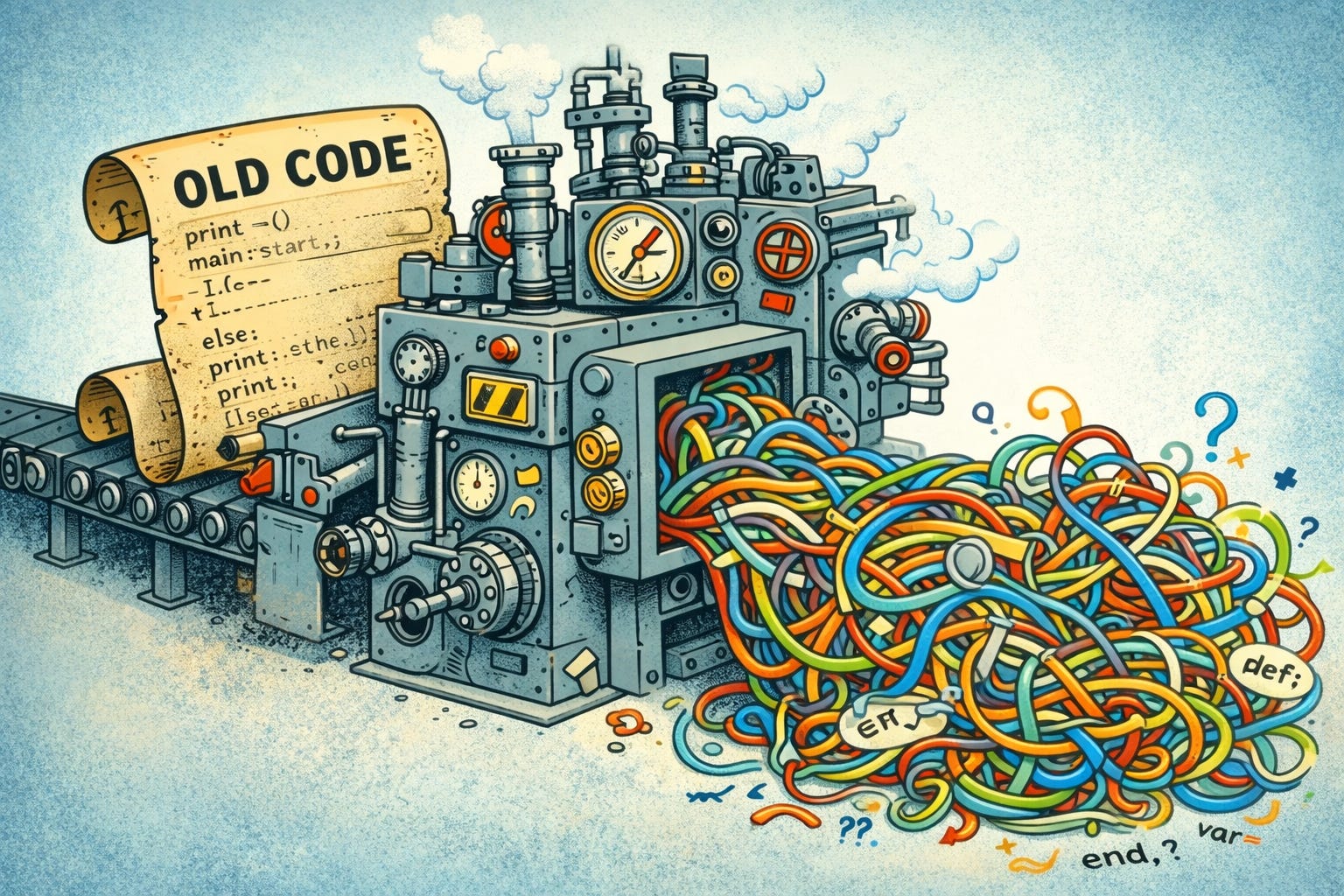
Once there was this project where a contractor had undertaken an effort to “transform” a certain body of code from an “old” programming language to a “contemporary” one.
In the first meetings, one would have been amazed by the extreme optimism and certainty2 expressed by the contractor team. They were confident they could swiftly, almost effortlessly, convert the “old” code; no problem.
To anyone who had ever dealt with “old” code transfer to new tools, such claims would have sounded suspicious3.
So, the project started.
The first part was mainly giggling with minor schedule tweaks.
”Yes, there should be some manual effort here and there…” they said.
”Most important is that QA will check this very well!” they said.
Then they had realized there were code sections that could not possibly be migrated and others that were so intricately4 written—they lost functionality or direction.
So started the chanting part of the project, where the contractor “explains” and “negotiates” those parts the customer (!) should take care of instead of…what was promised…
At last, when much of the converted code was foul and useless, the project entered its melancholy stage. Everybody was so wise after the fact to realize that it would have been easier to rewrite the damn thing rather than wasting all this time on a snake oil ‘solution.’
In order to stop pouring [more] good money into this abyss, the project was promptly concluded, with either partial (or no) conversion to certain modules, much manual work to fix and refunctionalize the ‘converted’ code, and—of course—an obscene QA effort with testing over and over again, comparing versions and sub-versions…
Some parts had never been recuperated…
Not to say—purpose…
Not to say—arrogance…
Not to say—preposterous…
Not to say—poorly…